Blog post

Work smarter this holiday season: What’s new in Microsoft Monetize

October 21, 2026
Publisher Newsletter Holiday Edition 2026.

Our latest updates are designed to help you move faster, monetize smarter, and get more from Microsoft Monetize ahead of the holiday demand peak. Log in to explore the latest Copilot capabilities, upgrade your adapter, and begin preparing inventory. 

Check out the latest in Microsoft Monetize

The holidays are right around the corner, and every opportunity to work smarter and capture more value matters. This season’s Microsoft Monetize updates are designed to help publishers spend less time investigating issues, strengthen connections to demand, and prepare inventory for the busiest stretch of the year. 

Read on to see our new Copilot troubleshooting and data visualization features, demand integrations and richer OpenRTB signals, and more. Plus, we’ll help you prepare for the AppNexus adapter shutdown.
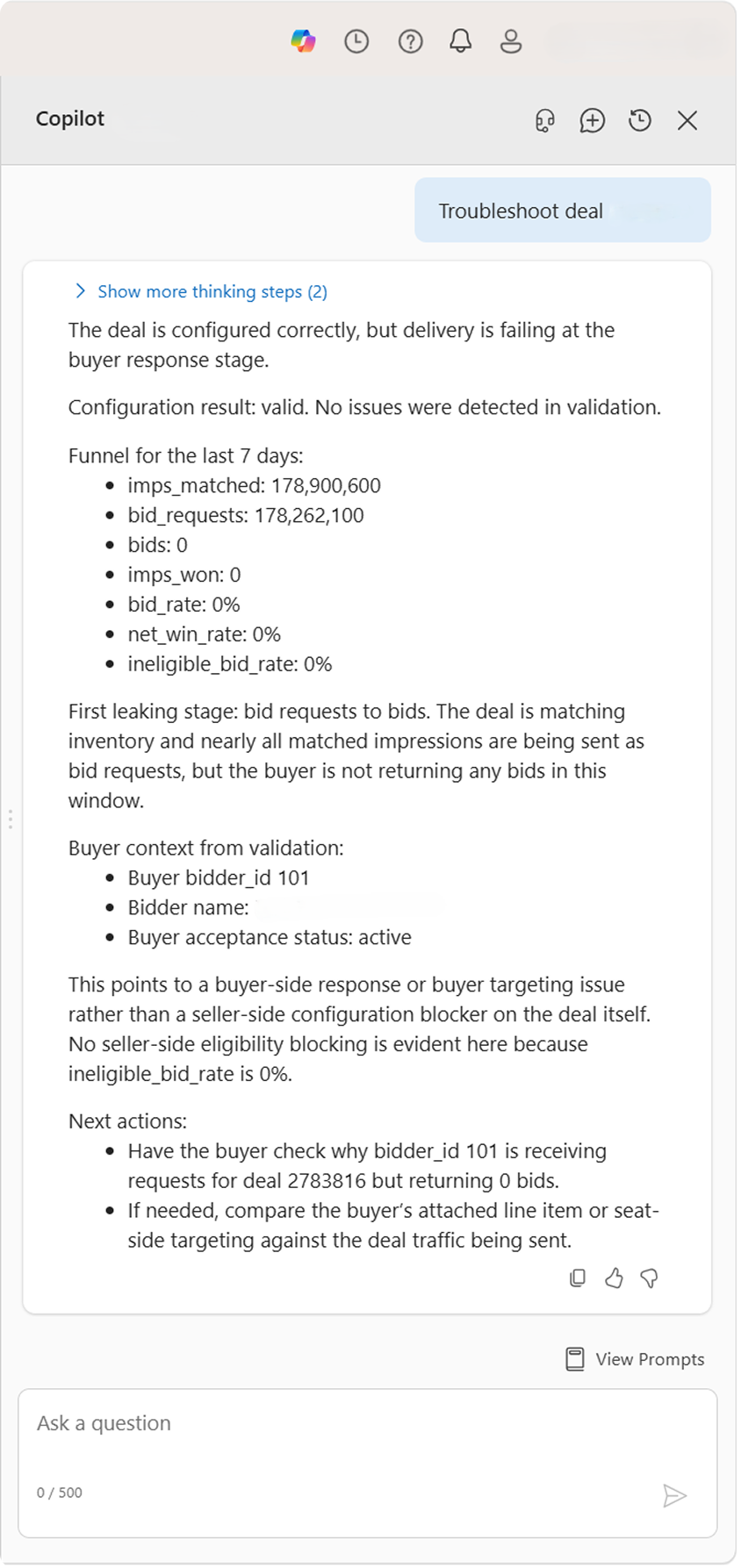
Earlier this year, we announced Copilot capabilities backed by Model Context Protocol (MCP). Building on that, Microsoft Monetize has expanded the feature set with a Deal Troubleshooting Agent.

Instead of manually searching for the reason a deal is not spending, you can enter a prompt like “Troubleshoot deal [ID or name].” Copilot will then run a series of checks across object setup and delivery, highlight likely causes, and recommend next steps.


For publisher teams, this shortens the path from identifying a delivery problem to taking action. No more checking multiple settings and reports to narrow down a cause. Users can simply receive a structured assessment that brings relevant checks and recommended actions into one workflow. 

Teams can diagnose issues more consistently and can get clearer information when coordinating with operations or support. Overall, it reduces the time a deal remains underdelivered while the cause is investigated. During high-demand periods, faster troubleshooting can protect campaign performance and the revenue opportunity tied to active deals. 

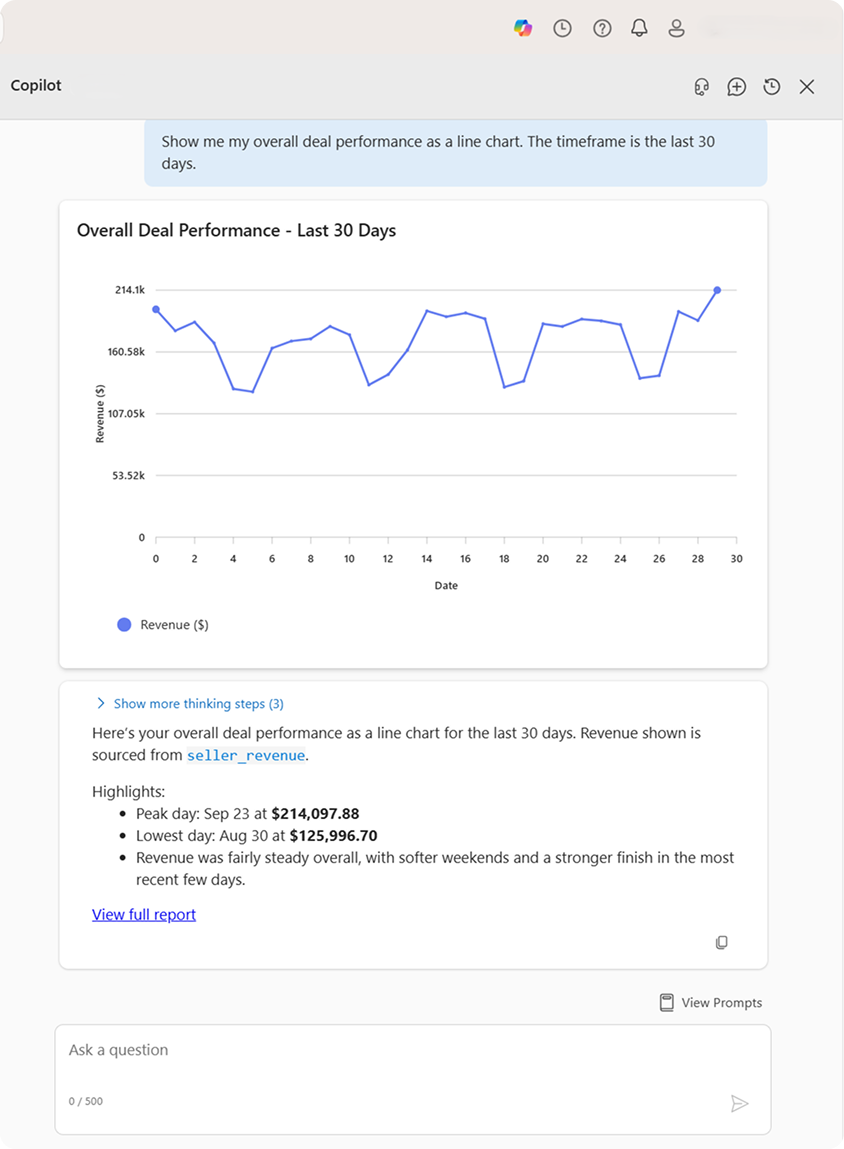
Copilot can now turn reporting results into line, bar, pie, and donut charts. This makes trends, comparisons, and opportunities easier to spot, understand, and share. For example, you can ask: “Daily impression delivery of line item [ID or name]. Show as a line graph.”


Copilot displaying a line chart of deal performance


This means less time publishers need to spend on exporting data, building charts, or translating rows of results into a story. Visualizations can help teams quickly recognize delivery patterns, compare performance across inventory, and surface potential opportunities or issues that deserve attention. 

They also make insights easier to communicate. Whether you’re reviewing performance with an account team, sharing an update with leadership, or deciding where to optimize next, a clear visual can help stakeholders understand the takeaway faster and move from analysis to action with greater confidence.

Try these features in your Microsoft Monetize account today, and share your feedback with us through our Copilot survey, so we can continue making improvements to your experience.

Holiday shopping brings significant consumer spending and increased advertiser demand. We’ve been strengthening Microsoft Monetize demand connections to help create a more efficient path for spend to reach publisher inventory.

Since 2024, Microsoft Monetize has supported receiving OpenRTB 2.6 dynamic ad pod requests from publisher partners. In August 2026, we updated DSP partner integrations to pass 2.6 pod signals to DSPs, starting with The Trade Desk. This more efficient connection helps buyers bid more strategically and can strengthen monetization potential for connected TV inventory.

Microsoft Monetize now applies Amazon’s Dynamic Traffic Engine traffic-shaping recommendations locally, directing Amazon DSP capacity toward Monetize publisher inventory. The result is a more efficient bid stream and a stronger path for advertiser spend to reach publisher properties.

An updated Publisher Defined Programmatic API deal-sync connection is designed to streamline how non-guaranteed deal inventory is surfaced and activated for buyers, reducing friction between deal creation and activation.

This quarter, Microsoft Monetize released seven signal updates that provide DSPs with richer, more standardized information about content, identity, devices, video placement, and transaction context. Better signals can help buyers recognize relevant inventory and make more informed bidding decisions.

We want to share an important reminder to help you prepare for peak-season demand. In early 2027, the AppNexus adapter will shut down, including removal from Prebid.js and deprecation of the legacy endpoint.

So if you haven’t already, now’s a great time to upgrade your legacy AppNexus adapters to the Microsoft Prebid Adapter and confirm that you’ve updated to Prebid.js v11.36.0. This version of Prebid.js supports important consent passthrough to avoid potential spend impact from DSPs, particularly DV360. Upgrade to the latest version now.

These updates are designed to help you move faster, monetize smarter, and get more from Microsoft Monetize. Log in to explore the latest Copilot capabilities, upgrade your adapter, and begin preparing inventory before demand peaks. 

We’re here to help you make the most of the holiday season. For personalized guidance, reach out to your account executive or contact Microsoft Advertising support.

Authors

  • Nick Bolt

    Nick Bolt

    SENIOR PRODUCT MARKETER