Blog post

The future of immersive advertising, today

February 05, 2024
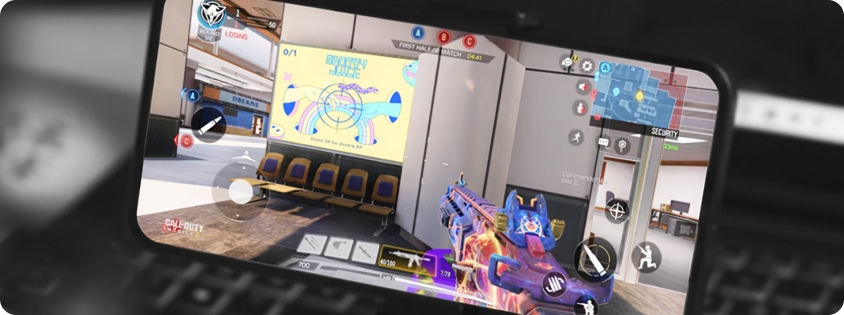
Smartphone mounted on a controller showing a first-person shooter game (Call of Duty: Mobile) in progress.

Gaming is shifting from “flat” to immersive, offering brands a chance to meet players in virtual worlds with engaging experiences that feel natural, not disruptive. This blog explains why immersive ads must begin with the player, integrate seamlessly, and deliver value. Brands that embrace this shift now can get ahead because the future of advertising is already here.

Subscribe to the Game Theory newsletter

With the digital gaming landscape constantly evolving across mobile, console, PC, streaming, and beyond, many advertisers have been unsure how, whether, or when to jump into in-game ads. Beyond experimental budgets, many advertising plans today are focused elsewhere, and advertisers continue to make the same mistake that they have historically made with each new phase of the Internet; they are allocating budgets to channels where consumers used to be, instead of where consumers are.

The future of advertising is immersive, because the future of entertainment is immersive. Unlike the more recent shifts from linear to CTV, or desktop to mobile, the shift from “flat” to “immersive” is a transformative leap - more akin to the shift from print/legacy media to digital in the early days of the Internet. While immersive advertising is still an emerging concept for many advertisers, those who have not begun to experiment with it are already behind the curve. It’s past time for advertisers to get in the game.

For brands looking to understand the potential of immersive advertising, it makes sense to start by understanding the power of gaming as it exists today—both in terms of audience behaviors and opportunities for brands.


 

Person seated in an outdoor stadium, looking at their smartphone while dressed in athletic wear.

For immersive advertising gaming experiences to be successful, it is critical that they do not disrupt the player experience but rather, enhance it. This can only be done by keeping the player experience at the center of any decisions around brand integrations into the game. 

Prioritizing the player's experience above all means delivering the right ad at the right moment. Our in-game ads are highly customized to each game, and appear to the right players in the moments that maximize the opportunity for positive brand lift and other measurable outcomes. These ads are by design both immersive and natively seamless; they exist as logical components of a virtual world, providing enhanced realism for players. Ads actually make games “feel” more authentic.

For our free-to-play mobile games like Candy Crush, we offer in-game currency and boosters so advertisers can reward players for their time and attention. Rewards are essential for creating positive brand perception and offer a meaningful value exchange for players. The result is a win for both players and brands—players get an enhanced gaming experience while brands are reaching audiences when they are highly engaged and paying attention.

When done right, a brand’s immersive advertising tactics have the potential to cultivate a positive halo effect for players. As a starting point, brands need to develop experiences that employ thoughtful, creative-led strategies designed from the ground up for the virtual worlds in which they will exist. Creativity helps to facilitate impactful moments for the right brand, in the right game, with the right player.

In this next phase of in-game advertising, brands can begin forming positive associations for players with beautiful creative that seamlessly integrates with virtual worlds. This can be achieved by returning to thoughtful, creative-led strategies; consider the player, consider the context, and consider the brand “fit”. The best games in the world will heavily control the player experience, and even if your brand desperately wants to appear in a given title, you may not qualify. But if you begin with the player and design for a specific virtual world, you can maximize your ability to achieve brand/player/game fit.


Person holding a smartphone and viewing a colorful map screen in Candy Crush Saga.

The most effective advertising strategies are those that begin with something unique, premium, and intentionally curated, and this is especially true of immersive advertising. Experiences that are designed with an understanding of the immersive environment and created specifically for that platform deliver a more seamless integration than content which has been retrofitted to an interactive environment.

Beginning with an understanding of immersive environments before designing the experiences also ensures brands avoid the trap of premature scaling and maintain the focus on the player’s experience. 

Players are exceedingly picky about the quality of games (and growing moreso, as the market continues to expand) and go to great lengths to avoid subpar experiences. But those experiences that honor the player’s time and investment achieve “premium” status in their minds, leading to even greater outcomes for brands down the line.

The future of immersive advertising in mobile gaming and beyond is brimming with both creative and strategic potential. As advertisers and brand leaders, we stand at a unique vantage point where we have the opportunity to shape this promising future. This opportunity is not just to create a new, immersive reality but to carve out a reality that resonates with the gaming community and adds value to players.

Understanding the current landscape of gaming is a crucial step towards comprehending the potential of immersive advertising tomorrow. The world of gaming today offers a glimpse into the future of advertising. Its dynamic, engaging environment and the deeply involved audience provide fertile ground for immersive advertising to grow and evolve. By focusing first on players, designing for virtual worlds, and prioritizing the immersive experience, brands can take the transformative leap into immersive advertising.

Authors

  • Mat Harris

    Mat Harris

    VP OF PRODUCT MANAGEMENT