AIM for AI search and AI-led marketing

Illustration of AI readiness

AIM gives marketers a clear path to becoming AI-ready across Microsoft consumer properties. It helps teams harness AI to shift from keyword-driven optimization to intelligent discovery, automation, and measurable performance powered by stronger signals, structure, assets, and measurement.

Illustration of a magnifying glass focusing on the word AIM

AI is reshaping how consumers discover and convert, but most marketing approaches aren’t built for this shift. AIM provides a clear, actionable roadmap to help marketers adapt because AI only performs as well as the data, assets, and measurement behind it. By strengthening these foundations, AIM enables more effective automation, better discovery, and stronger, measurable performance in an AI‑first world.

Understanding AIM

AIM is a framework designed to help brands understand where they are on their AI journey and what to do next. Built to be practical and flexible, it assesses readiness across key areas and translates this into a clear, tailored roadmap, enabling every business to prioritize the actions that will drive the greatest impact.

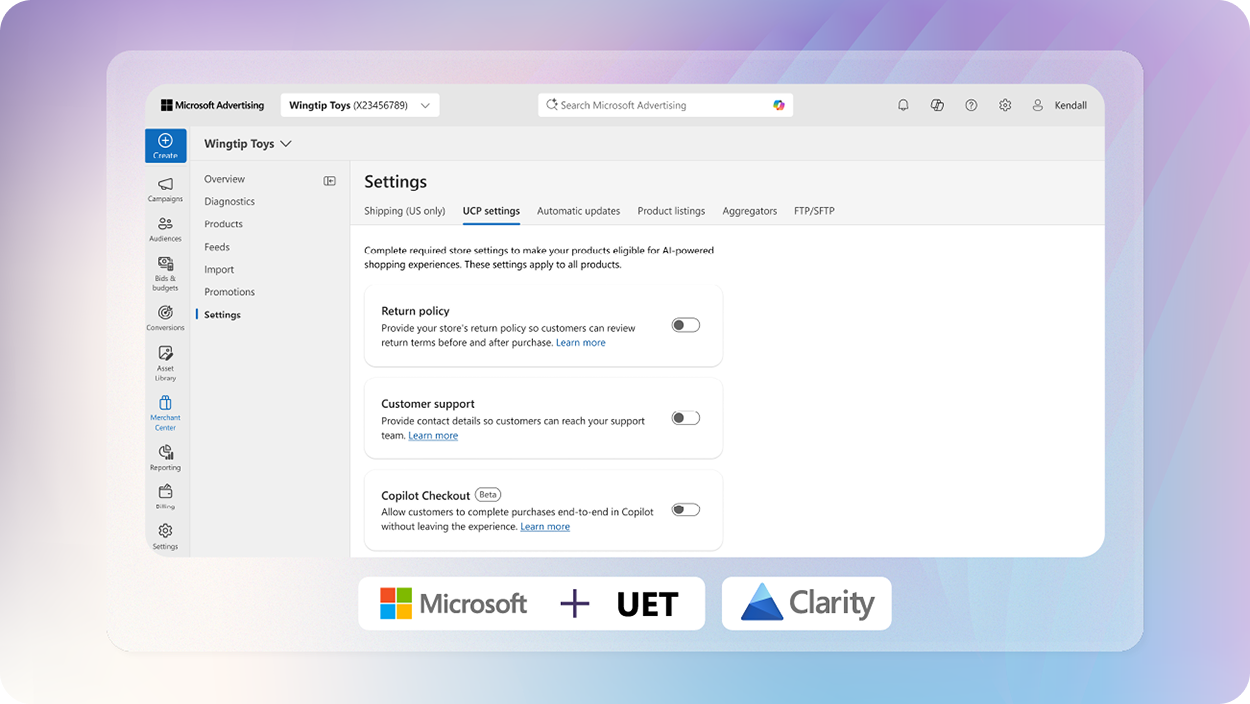
Illustration showing the Microsoft logo, the word UET and a Microsoft Clarity logo.

Measurement

Objective: Ensure decisions, bidding, and asset selection are grounded in accurate, fresh, and consistent performance signals.


Enablers:


  • UET and Consent mode
  • Online and offline conversions
  • Enhanced Conversions and enriched signals
  • Data refreshed frequently (daily/in near real-time)


Outcome: Measurement provides the trusted foundation that AI needs to optimize effectively.

Screenshot of the UI of the Microsoft Merchant Center.

Foundations

Objective: Build the technical and signal hygiene required for effective AI.


Enablers:


  • First-party data leveraged to expand reach and improve targeting
  • Asset breadth and depth across account; RSA, MMAs, Video ads
  • Feeds and catalog: Clean, complete, structured inputs in Microsoft Merchant Center
  • Microsoft Audience strategy defined


Outcome: AI has strong signals & clean structure to optimize from.

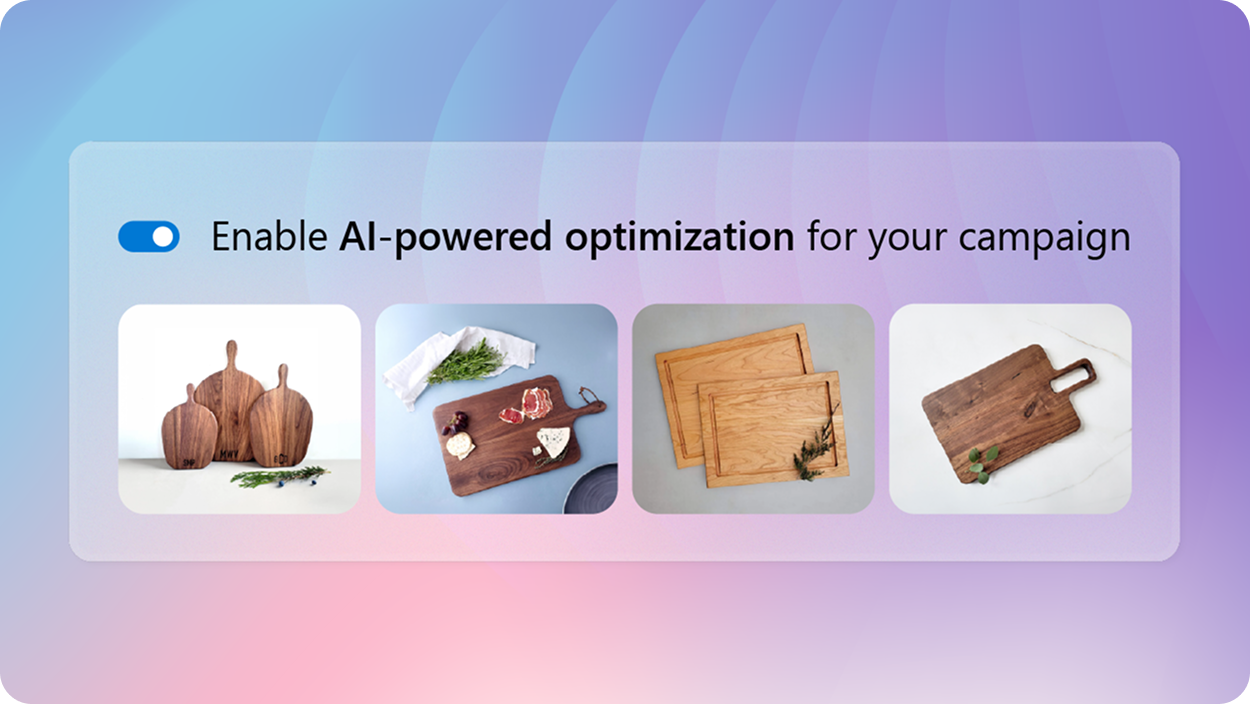
Visual representation of AI Max, showing various products.

Scaling

Objective: Expand reach and let AI automate workflows.


Enablers:


  • AI-driven campaign types activated: PMax, AI Max with Automated keyword targeting, Final URL Expansion, Automated text ad generation activated
  • O&O inventory activation to extend reach across Microsoft AI-powered surfaces
  • Using IndexNow for content freshness and utility
  • Adopting Clarity and leveraging AI Visibility metrics to optimize for AI discoverability


Outcome: Automated optimization across surfaces & scaled performance.

Leading

Objective: Redesign operations to be Human and AI.


Enablers:


  • Brand Agent/Agentic experience on site
  • Copilot-native ad experience adopted
  • Using Microsoft’s Incrementality and Brand uplift studies for mature measurement and outcomes
  • AI embedded in workflows, planning, creative production, and campaign optimization


Outcome: AI drives content, decisions, and optimization with minimal manual effort.

Visual of Copilot Checkout, showing the purchase of a lamp.

Transformative

Objective: Participate in the agentic web and enable autonomous optimization.


Enablers:


  • Agentic commerce readiness; UCP set up and enabled
  • Copilot Checkout Integration (U.S. merchants only)
  • Agent-led workflows driving core marketing workflows
  • AI Enabled Data signals and Freshness


Outcome: Brand becomes AI-ready for the agentic future: discovery, participation, conversion.

JD Sports advanced across multiple AI maturity pillars

Click growth

Increase in brand core CVR

Top impression share growth

"We know that our customers are increasingly using AI-enabled experiences for inspiration. We want to show up for our customers where they are, so we launched a new AI-led structure ahead of peak. This gave the platform a fuller view of intent, turning inspiration moments into buying decisions."

— Liza Nolan, Associate Director of Digital Media, JD Sports

How to use the AIM matrix

The AIM matrix provides a simple way to assess your current AI readiness across each pillar and stage. For each area, you evaluate your capability and assign a red, amber, or green (RAG) status—highlighting your strengths and opportunities to improve.


People holding hands outdoors in a grassy field.

Red

Indicates foundational gaps that are limiting AI performance

Visual representation of the maturity matrix in the color amber.

Amber

Shows areas that are partially implemented, but not yet scaled

Visual representation of the maturity matrix in the color green.

Green

Reflects strong, AI-ready capabilities that can be optimized and expanded

By reviewing your results across all pillars, you can quickly identify the biggest constraints to performance and prioritize the actions that will drive the greatest impact. The matrix then becomes a practical roadmap—helping you move from foundations to scaling, leading, and ultimately, transforming your marketing with AI.